
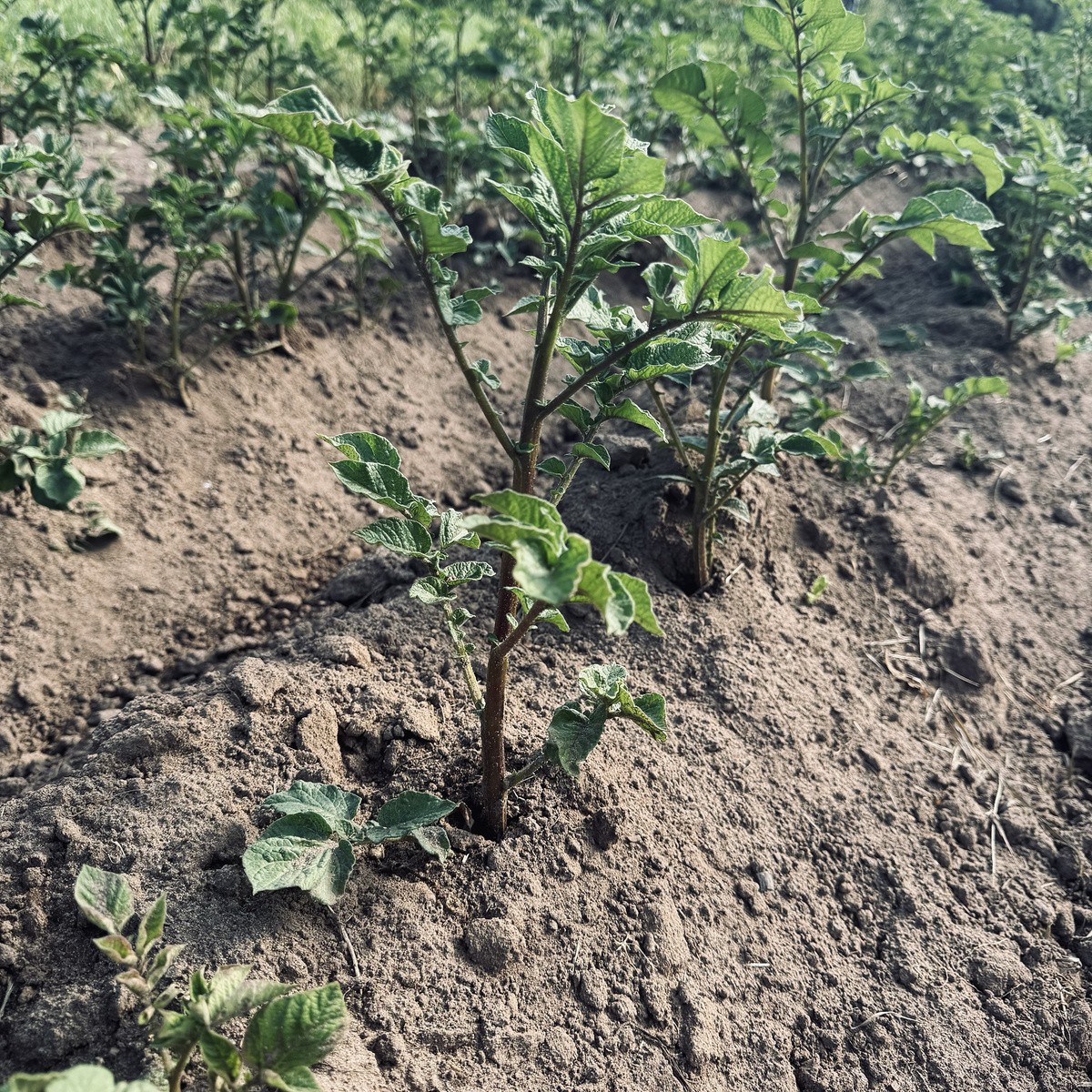
If you think growing potatoes is as simple as dropping a seed potato in the dirt and running a hoe down the row once a month, you are not alone. I used to think the exact same thing.
Growing up, my family always used the "trenching" method. We would pull the dirt away from the plants to create a deep watering furrow. We always had massive, beautiful, waist-high green potato bushes, but when it came time to harvest, the potatoes were incredibly tiny.
When I bought my own property in my 30s, I repeated this exact same mistake. I grew gorgeous vines, but only pulled about a single bucket of egg-sized potatoes from the entire bed. It was a humiliating harvest! That is when I realized that how you move the dirt around your potatoes completely dictates your yield.
If your potato plants are all vine and no spud, here is the difference between trenching and hilling—and why you need to switch your strategy immediately.

The Furrow Method (Looks Great, Yields Nothing)
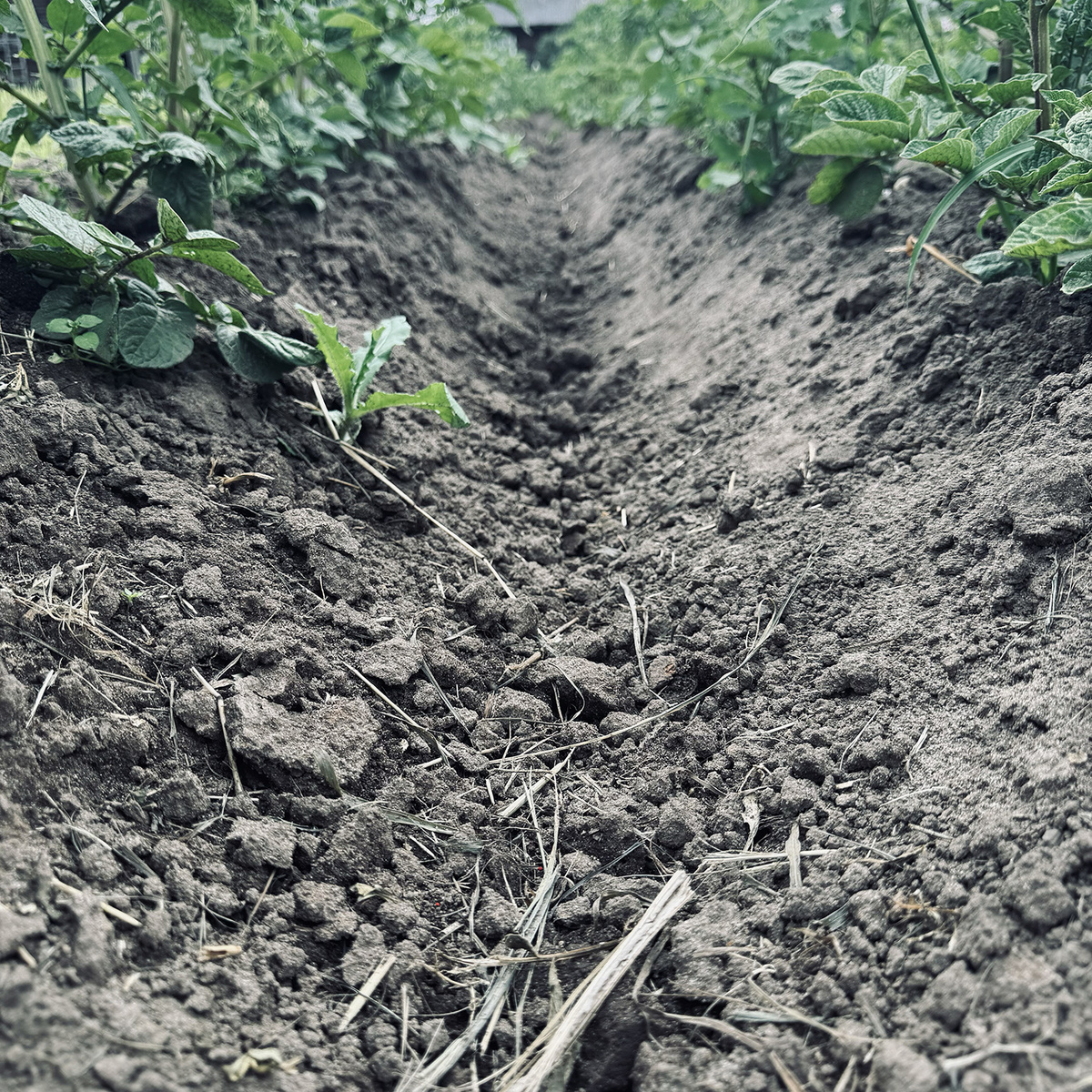
This is the old-school method where you pull the soil away from the base of the plant to create a trench (or furrow) between the rows for the water to pool into.
The Pros: It makes watering incredibly easy because the water goes straight to the root zone without running off. It is also physically easier to do.
The Cons: By pulling the dirt away, you leave the roots shallow and exposed. In the heat of the summer, the moisture evaporates instantly.
The Result: The plant is too "comfortable" on the surface. It puts 100% of its energy into growing massive green leaves and feels no biological need to store energy in underground tubers.
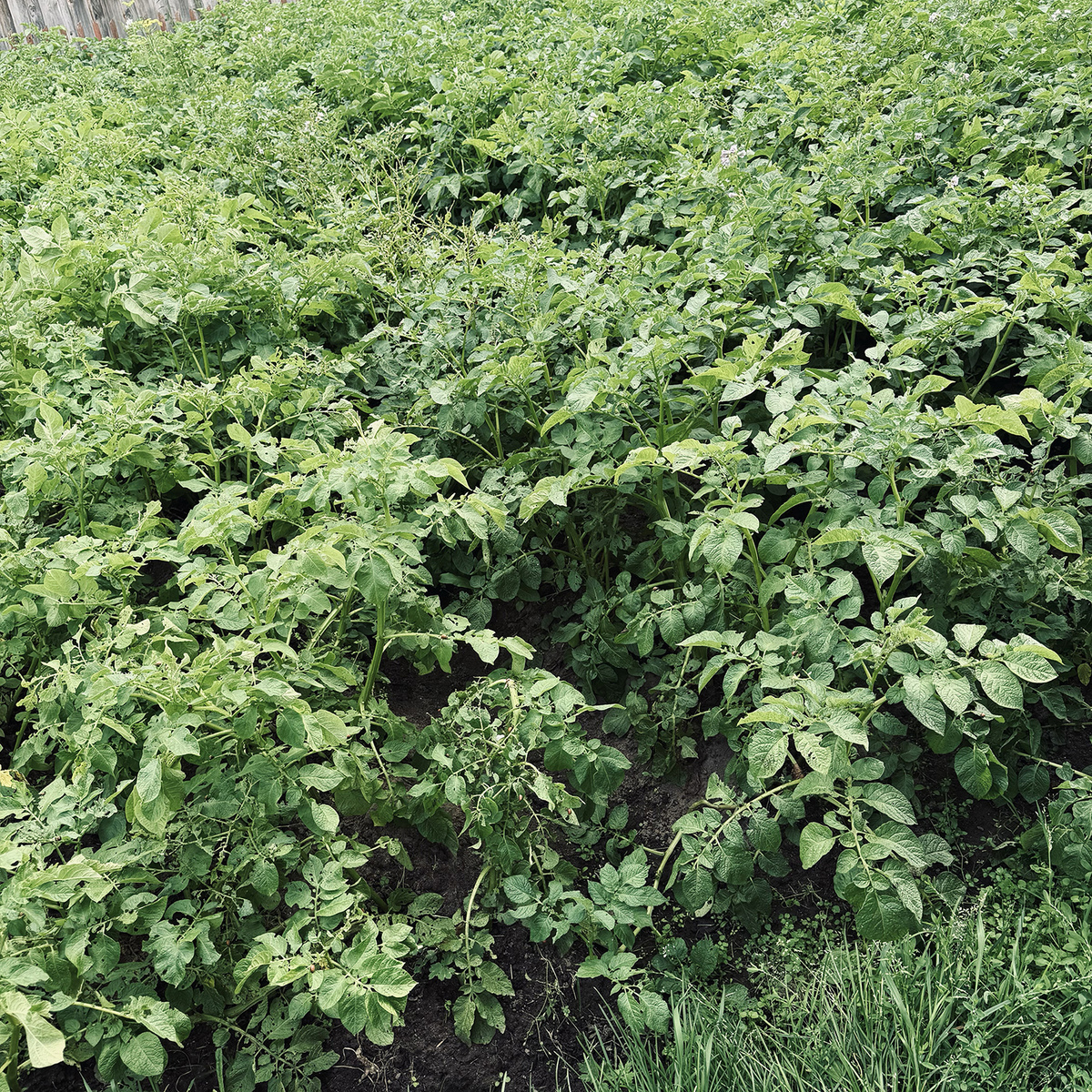
The Mounding Method (The Ultimate Tuber Builder)
Instead of pulling dirt away, you use your hoe to pull loose soil up and around the base of the main stem, creating a tall hill or mound.
The Pros: Hilling creates a thick, dark, moist cushion around the stem. This encourages the plant to send out secondary roots directly into the mound, which turn into extra potatoes! It also protects the shallow tubers from sunburn (which turns them green and toxic).
The Cons: It requires a lot more loose soil or compost, and you have to repeat the process a few times throughout the season as the plant grows taller.
The Science: Why Your Potatoes Need "Stress"
There is a simple gardening rule: if a plant is perfectly comfortable on the surface, it won't rush to reproduce. It is just like a tomato plant that gets too much nitrogen—you get a giant, fluffy green bush with zero tomatoes.
Potatoes actually need mild stress. By burying the stems in a dark, cool mound of dirt, you create soil pressure and mild moisture competition. This triggers the plant's survival mechanism, forcing it to rapidly form and swell its underground tubers to ensure its reproduction.
My Golden Rules for Hilling Potatoes
Through years of trial and error, I have dialed in the perfect hilling routine. Here are my non-negotiable rules:
Timing is Everything: Do your first hilling when the green plants are about 6 to 8 inches tall. If you do it sooner, you might bury them completely; if you wait too long, the stems become too rigid.
Use Mulch if You Lack Soil: If you don't have enough loose dirt to pull up into a mound, use organic matter! A thick layer of straw, grass clippings, or aged wood chips works perfectly to build the hill.
Beat the Heat: Never hill your potatoes in the middle of a blazing hot afternoon. Move the soil in the early morning or late evening when the ground is cool.
The Rain Hack: It is infinitely easier to hill potatoes the morning after a good rainstorm when the soil is soft and pliable. If there is no rain in the forecast, soak the beds the night before you plan to hill.
The Calcium Boost: When I build my mounds, I love to sprinkle a handful of crushed eggshells and hardwood ash around the stems. It deters crawling pests and gives the plants a much-needed calcium boost for better skin formation!
I am not a professional agronomist, just a weekend gardener who has made every mistake in the book. But if you want a pantry full of massive winter storage potatoes instead of just a pretty green garden, ditch the trench and start building those mounds!

 DIY & Decor
  Edible Garden
  Houseplants
  Lawn & Landscaping
  Outdoor Plants
  Tips & Tools


No comments yet.